 The Tangison Studio























AI by Industry · 7 May 2026 · 5 min read
AI for Agriculture in Namibia: A Practical Adoption Guide
Agriculture has been the heartbeat of Namibian livelihood for generations, from the cattle posts of Ovamboland to the commercial ranches of the Khomas.
By Tangi Iigonda, The Tangison Studio
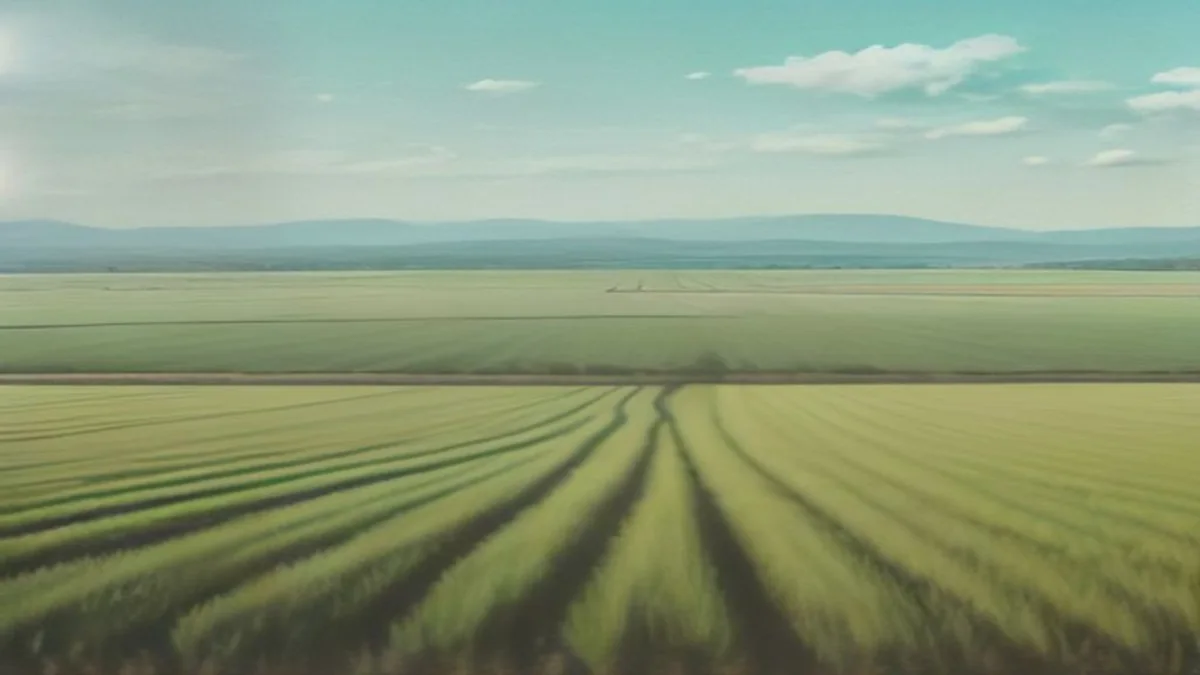
Agriculture has been the heartbeat of Namibian livelihood for generations, from the cattle posts of Ovamboland to the commercial ranches of the Khomas Hochland. Yet Namibian farming faces pressures that demand new approaches: recurrent drought, soil degradation, market volatility, and a changing climate that makes traditional knowledge increasingly unreliable. Artificial intelligence offers not a replacement for the farmer's wisdom but an augmentation of it, providing tools that can see patterns invisible to the human eye, predict outcomes beyond the range of experience, and optimise decisions across complexity levels that exceed any individual's capacity.
This research paper examines the current state and future potential of AI in Namibian agriculture, covering precision farming, livestock management, crop health monitoring, supply chain optimisation, and market intelligence. It presents practical frameworks for adoption, evaluates relevant tools and technologies, and provides a realistic assessment of the benefits, costs, and challenges that Namibian agricultural enterprises can expect as they integrate AI into their operations.
Precision Agriculture: From Satellite to Soil
Precision agriculture uses AI-driven analysis of satellite imagery, drone surveys, soil sensors, and weather data to optimise planting, irrigation, fertilisation, and harvesting decisions at the level of individual fields or even individual plants. For Namibian farmers, where water scarcity is the perennial constraint, precision irrigation alone can reduce water usage by twenty to forty percent while maintaining or improving yields. The technology has moved from experimental to operational globally, with platforms now available that require only a smartphone and a satellite subscription to begin generating actionable insights.
The key enablers for Namibian adoption are improving satellite coverage, decreasing sensor costs, and the emergence of mobile-friendly platforms that deliver insights via SMS or simple apps. Barriers include limited connectivity in remote farming areas, the upfront cost of sensor deployment, and a skills gap that makes it difficult for farmers to interpret and act on AI-generated recommendations without intermediary support from extension services or agritech companies.
Ai For Dryland Farming
The most impactful AI application for Namibian agriculture is drought prediction and response optimisation. Machine learning models trained on historical climate data, vegetation indices, and soil moisture readings can provide sixty to ninety day advance warnings of drought conditions, giving farmers time to adjust stocking rates, planting schedules, and water allocation strategies.
Livestock Intelligence
Namibia's livestock sector, particularly its internationally recognised beef industry, stands to benefit enormously from AI-powered monitoring and management systems. Computer vision applications can identify individual animals, monitor body condition, detect lameness or illness, and track grazing patterns. GPS-enabled collars combined with machine learning algorithms can optimise rotational grazing, prevent overgrazing, and alert farmers to animals that have strayed or are showing signs of distress.
The economic case is compelling. Early detection of disease outbreaks can prevent losses running into millions of Namibian dollars, as demonstrated during recent foot-and-mouth disease scares. Optimised grazing management can improve weight gain by ten to fifteen percent, directly enhancing the value of each animal at market. Automated counting and sorting reduces labour costs and human error in large herds, particularly during weaning and vaccination campaigns.
Case Study: Otavi Grain Cooperative
The Otavi Grain Cooperative, representing over two hundred smallholder and commercial grain farmers in the fertile Otavi triangle, faced a persistent challenge: post-harvest losses averaging eighteen percent due to inadequate storage conditions, unpredictable market prices, and limited access to timely market information. With technical support from an agritech partner, the cooperative deployed an AI-powered platform that integrated weather forecasting, storage condition monitoring, and market price prediction.
The results were far-reaching. Storage losses dropped to under five percent within the first season through AI-optimised ventilation and moisture control. Market price predictions enabled farmers to time their sales for maximum revenue, generating an average price improvement of twelve percent compared to the previous season's sales
patterns. The cooperative also used the platform's yield prediction capabilities to negotiate better terms with bulk buyers, who valued the improved forecasting accuracy. Total economic benefit across the cooperative was estimated at seven million Namibian dollars in the first year, against a technology investment of one point two million.
AI Tools for Namibian Agriculture
- FarmLogs / Granular: Crop monitoring, yield prediction, field mapping. Web and mobile, moderate learning curve. Moderate subscription.
- Climate FieldView: Precision planting, weather analytics, seed optimisation. Web and mobile, good support documentation. Moderate subscription.
- Aerobotics: Tree and crop health monitoring via satellite and drone. Mobile-first, designed for African farmers. Freemium with paid tiers.
- Cainthus / SCR: Dairy and livestock monitoring via computer vision. Requires camera installation. Higher initial investment.
- TaroWorks / CommCare: Mobile data collection for smallholder cooperatives. Mobile-only, very low barrier. Low cost per user.
- Google Earth Engine: Satellite imagery analysis for land use and vegetation. Technical expertise required. Free for research; paid for commercial.
Implementation Roadmap for Agricultural AI
For most Namibian agricultural enterprises, AI adoption should follow a phased approach that begins with low-cost, high-impact applications and progressively builds toward more sophisticated capabilities. The following roadmap is designed for a typical mid-size commercial farm or cooperative but can be adapted for both larger and smaller operations.
- Discovery: Months one to three. Data audit, connectivity assessment, use case prioritisation, vendor evaluation. Clear AI strategy and prioritised project list.
- Foundation: Months four to nine. Deploy basic monitoring, implement data collection, train key staff, launch first pilot. First AI-generated insights, baseline data established.
- Expansion: Months ten to eighteen. Scale successful pilots, add precision agriculture tools, integrate with existing farm management. Measurable yield improvement, cost reduction demonstrated.
- Optimisation: Months nineteen plus. Advanced analytics, predictive modelling, ecosystem integration, data-driven decision culture. AI embedded in farm operations, continuous improvement.
Conclusion: The Intelligent Farm
The future of Namibian agriculture lies not in replacing the farmer with a machine but in equipping the farmer with intelligence that extends sight, prediction, and optimisation beyond what any individual could achieve alone. The tools exist today, at price points and complexity levels that make adoption feasible for enterprises of every size. What remains is the collective will to invest, learn, and adapt. The Namibian farmer has always been defined by resilience and ingenuity. AI adds a new dimension to those qualities, enabling the intelligent farm that is both productive and sustainable, both profitable and responsible, both rooted in tradition and oriented toward the future.
Precision Farming and Intelligent Agribusiness in Namibia
Keep reading.



Turning this research into a working advantage?
The Tangison Studio designs and builds the brand, product, and systems behind intelligent organizations. Start with a conversation, not a contract.